
To get access to the PAW platform or create an account or access please contact rc@petfoodcompliance.com.
What Is the NASC? It’s Not a Regulatory Agency (Even Though It Feels Like One)

If you've spent any time in the pet food or supplement space, you've almost certainly come across the acronym NASC. It shows up on product packaging, in retailer conversations, and in industry discussions about quality and compliance.
And if you're a brand owner trying to figure out what the National Animal Supplement Council actually means for your business, the whole thing can feel a little murky.
So let's clear it up!
The NASC is genuinely valuable and worth understanding but one of the most common misconceptions we hear from pet food and supplement brands at every stage is that NASC is some kind of government or regulatory body overseeing the industry. It isn't and understanding the difference could save you from a costly compliance gap down the road.
So, What Is the NASC?
The National Animal Supplement Council (NASC) is a nonprofit trade association. It was founded in 2001 at a moment when the animal supplement industry was in a bit of a regulatory storm. Products were being pulled from shelves, enforcement was inconsistent across states, and consumers had no reliable way to evaluate quality from one brand to the next.
NASC stepped in to create voluntary standards where few existed. They developed what's become the gold standard of the supplement space: the NASC Quality Seal, a yellow badge you've probably seen on supplement packaging for dogs, cats, and horses.
To earn that seal, companies have to go through a rigorous process. It's not something you buy or simply apply for and receive.
To display the NASC Quality Seal, brands must:
- Pass a comprehensive independent third-party quality audit (repeated every two years)
- Maintain a quality control manual with documented standard operating procedures
- Run an active adverse event reporting system tied to the NASC's national tracking database
- Follow NASC pet supplement labeling requirements, including specific caution statements required by the FDA's Center for Veterinary Medicine
- Submit to random independent product testing to verify label claims
That's a real commitment, and it means something. The NASC Quality Seal is a credible, recognized signal of quality in the marketplace. Retailers increasingly look for it, consumers trust it, and earning it takes genuine work.
NASC Is Not a Government Agency
This is where the confusion tends to set in and it's totally understandable. The National Animal Supplement Council works closely with the FDA. It collaborates with AAFCO. It has active relationships with state regulators. Its standards mirror many regulatory requirements. It even has a "Regulator" membership tier specifically for government employees who oversee animal supplements.
So it looks like it's part of the regulatory system, but it isn't.
NASC has no legal enforcement authority. It cannot fine your company, issue a stop-sale order, mandate a product recall, or compel any state or federal agency to treat your products differently. It's a trade association — a highly influential and respected one — but a private nonprofit organization, not a government body.
A helpful comparison: AAFCO operates similarly. AAFCO isn't a regulatory agency either but its model regulations are adopted by most states, giving it enormous real-world influence on your compliance requirements. NASC works the same way. It works with the regulatory system, and it has shaped that system for the better, but it isn't part of it.
Here are the agencies that have legal authority over your pet supplement products:
The FDA
It regulates animal food (including supplements) under the Federal Food, Drug, and Cosmetic Act. Depending on your facility size and production activity, you may need to register your facility and comply with FSMA Preventive Controls for Animal Food. Critically, DSHEA — the Dietary Supplement Health and Education Act that governs human supplements — does not apply to animal products. Pet supplements are regulated as food or drugs depending on their intended use.
State Departments of Agriculture
This is where most day-to-day pet supplement compliance happens. Most states require product registration, manufacturer or distributor licensing, and annual renewals, often with per-SKU fees. This is separate from, and not replaced by, NASC membership.
The FTC
This group governs the claims you make — not just on your label, but on your website, in your social posts, and in influencer content. "Calming," "supports immune health," and "helps with anxiety" are all phrases that can draw scrutiny regardless of your NASC status.
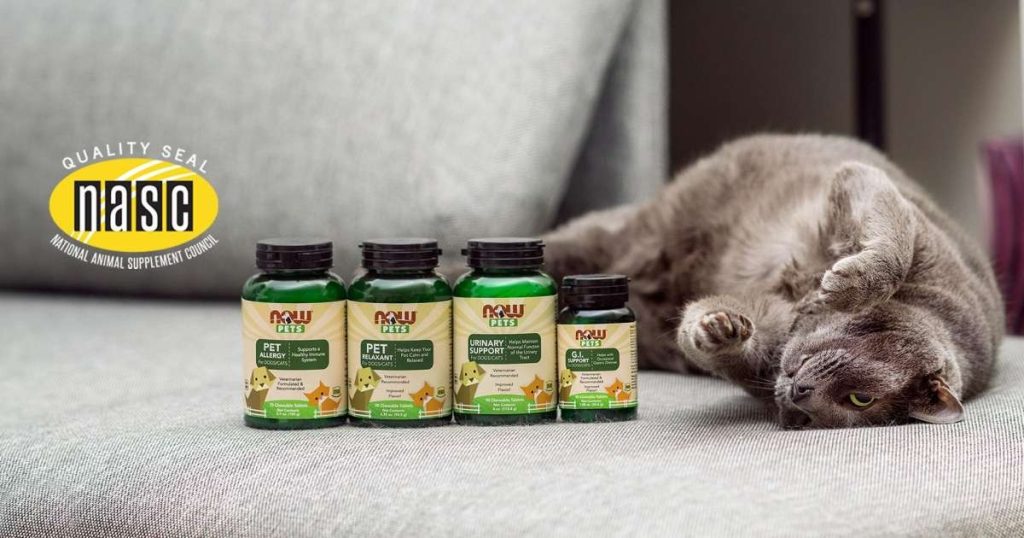
Photo credit: NOW Pets
NASC Membership Is a Quality Credential Not a Compliance Shortcut
This is the most important takeaway: NASC membership does not exempt your products from state registration requirements.
It doesn't replace your manufacturer or distributor license. It doesn't satisfy FDA facility registration. It doesn't handle your tonnage reporting. It doesn't make your label automatically compliant in every state.
Even products that follow NASC's labeling templates may still be required to register in certain states. Some states recognize those templates; others require brands to follow their own state feed regulations entirely. The only way to know which applies to your products is to check product by product, state by state.
We know that sounds like a lot. And it is! This is why our registration and licensing services exist. Missing a single state registration can create retailer delays, or worse, enforcement letters. Selling across all 50 states means managing 50 different sets of expectations, and that's before you factor in how individual states classify supplement products versus animal feed.
Where Pet Supplement Brands Misstep
Beyond the government agency misconception, here are two other areas where NASC membership is sometimes (incorrectly) assumed to provide a compliance free pass:
Product claims
NASC has labeling guidelines and following them is a smart baseline. But those guidelines don't insulate you from FDA or FTC scrutiny if your language crosses into drug-claim territory. Structure/function language like "supports joint health" or "promotes calmness" can shift your product's regulatory classification, and that shift can happen whether you're NASC-audited or not.
Product classification is one of the first things we encourage every brand to lock down. If you're unsure whether your label language is creating unintended regulatory exposure, this free two-minute quiz is a fast first checkpoint.
Retailer onboarding
Retailers are asking harder questions at compliance review than they were a few years ago. A quality seal and a current state registration record tell two different stories. Buyers increasingly want documentation of both and assuming one covers the other is a gap that tends to surface at the worst possible moment.
So Where Does NASC Fit In?
Think of NASC membership and regulatory compliance as two parallel tracks. Both matter, but neither is a substitute for the other.
NASC membership demonstrates that your brand is committed to quality standards, responsible labeling, and continuous improvement. That carries weight with retailers, consumers, and regulators alike. The NASC has done meaningful work to create a more stable, more favorable regulatory environment for the supplement industry and brands that participate in that effort benefit from it.
But the state registrations, the FDA obligations, the licensing and annual renewals still have to happen regardless of your membership status.
The good news is that brands who run both tracks tend to scale much more cleanly. They don't hit surprise roadblocks at retailer onboarding. and they're not caught off guard when a state department of agriculture comes knocking.
Not Sure Where Your Compliance Gaps Are?
Whether you're pre-launch, mid-growth, or cleaning up an existing product lineup, our team at Pet Food Compliance works with pet supplement and food brands every day to make sure both tracks are running smoothly. We know which states are going to ask the hardest questions about your products and we know how to get you ready before they do.
More Industry Updates
Join Our Newsletter
Good stuff only — we promise!

